A beautiful Fort Lauderdale waterfront home can be easy to fall for. The view draws you in, the dock looks ready for your boat, and the idea of quick days on the water feels hard to beat. But in this market, buying the right property means looking beyond the photos and understanding how the home, dockage, seawall, and water access all work together. If you are considering a waterfront purchase in Fort Lauderdale, this guide will help you focus on the details that shape everyday use, long-term value, and a smoother buying process. Let’s dive in.
Why Fort Lauderdale dockage matters
Fort Lauderdale is a distinct waterfront market because the city is deeply shaped by water. The city notes that it has 165 miles of scenic inland waterways across 36 square miles, and it also identifies the area as low-lying and especially susceptible to flooding. For you as a buyer, that means waterfront value is not just about the view. It is also about the condition and usability of the dock, seawall, and route to open water.
You will also see a wide range of waterfront settings in Fort Lauderdale. Official city materials repeatedly reference areas such as Harbor Beach, Las Olas Isles, Harbour Isles, Lauderdale Harbours, Lauderdale Isles, and Nurmi Isles. Listing language often centers on oceanfront, Intracoastal-front, riverfront, and canal-front homes because the city’s major water bodies include the Atlantic Ocean, Intracoastal Waterway, Middle River, C-13 East, C-12, and the New River Canal.
What to evaluate first
Look past the view
When you tour a waterfront home, start with the features that affect actual boating use. A pretty backyard and long water view do not tell you whether your boat will fit, whether the canal has usable depth at low tide, or whether the existing dock improvements were properly approved.
The most useful listing details are usually practical ones. Focus on dock size, boat lift capacity, seawall condition, permit history, and whether the canal is tidal or subject to seasonal depth swings. These points often have a bigger impact on daily enjoyment than cosmetic upgrades.
Match the property to your vessel
Not every waterfront property fits every boat. Canal width, turning room, water depth, and the route to open water can all affect whether a home feels convenient or frustrating. A home that works well for one owner may not work well for your vessel size or boating habits.
This is especially important in Broward because waterways may also be shaped by speed restrictions and local operating conditions tied to manatee protection. In real life, ease of access matters just as much as having a dock in the first place.
Common dock and seawall features
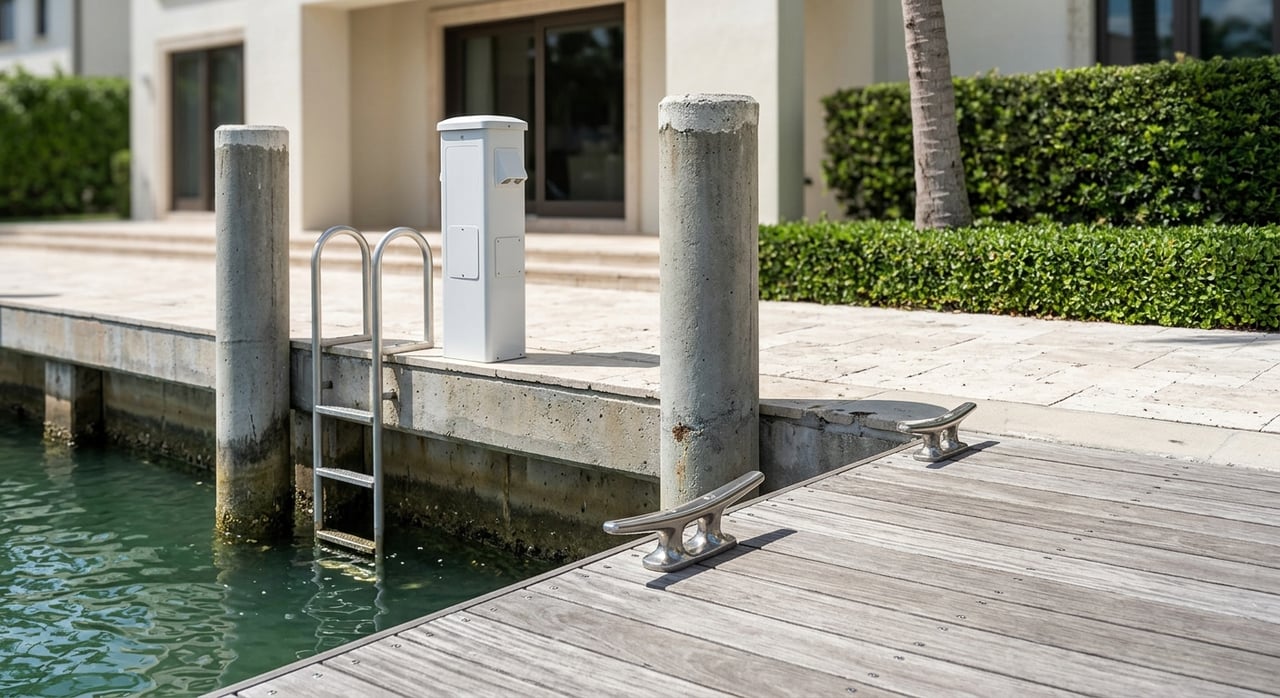
In Broward County, common waterfront structures include docks, seawalls, bulkheads, floating vessel platforms, boat lifts, piers, and pilings. You may see a mix of older and newer improvements from one property to the next. Some will be simple private docks, while others will include more substantial lift and mooring setups.
That variety is one reason due diligence matters so much. Photos can show a dock and lift, but they do not confirm whether the work was permitted, whether it meets current standards, or whether future repairs may trigger additional approvals.
Understand basic permitting context
Broward County states that a license is required before work in, on, over, or under Broward waters. The City of Fort Lauderdale places this work under its Boatlift-Dock-Seawall-Pile permit category, and the city’s permitting system runs through LauderBuild.
Broward County’s April 2025 technical bulletin explains that some minor work may qualify for a streamlined Environmental Resource General License. Examples include dock repair or replacement that is not enlarged beyond 500 square feet of over-water surface area, and private noncommercial docks of 500 square feet or less when no dredging or filling is required except to install pilings. Larger work, or work involving dredging or wetlands, generally requires a regular Environmental Resource License.
Why canal depth is a big deal
Tides affect usability
On tidal canals, depth is not a small detail. Broward’s general-license checklist specifically asks for mean high water, mean low water, and bottom elevations. That tells you something important as a buyer: usable dockage depends on conditions you may not notice during a quick showing.
A slip that looks fine at one point in the day may feel different at low tide. If you plan to keep a specific vessel at the property, ask for current depth information and consider how tidal swing could affect routine departures and returns.
Ask how access works day to day
A direct question can save you time and money: how does the route to open water work in everyday use? You want to understand whether the waterway feels easy to navigate, whether there are nearby no-wake or speed-restricted areas, and whether the route suits your comfort level as an operator.
The practical answer matters more than broad marketing language. In waterfront buying, convenience is often defined by maneuverability, depth, and travel time, not just a map pin near the Intracoastal.
Inspection questions worth asking
A waterfront inspection should go beyond the main house. The dock, lift, and seawall are major parts of the property, and they deserve focused review.
Bring these questions into your due diligence:
- What is the water depth at the dock at low tide?
- Is the lift properly sized for the vessel you plan to keep there?
- Does the seawall show settlement, visible wear, or signs of recent repair?
- Is there permit history for the dock, lift, seawall, and later additions?
- Is the structure legally existing or potentially grandfathered?
- Would future repair or expansion likely require city or county approvals?
- Is the canal tidal or prone to seasonal depth swings?
- Are there nearby manatee-zone or no-wake constraints that affect routine boating?
These questions help you move from surface-level interest to real decision-making. They also help you compare one waterfront home to another in a more disciplined way.
Marine support near the property
Your home dock is only part of the picture. Depending on your vessel and how you use it, nearby marine support can make ownership easier.
The City of Fort Lauderdale maintains marine facilities on the New River and adjacent to the Intracoastal Waterway, and the city operates four complimentary vessel pump-out locations. The city also notes municipal docking at Cooley’s Landing and New River/Downtown Docking on a first-come, first-served basis. For some owners, that can be useful if a home dock is under renovation, limited in size, or not ideal for every boating need.
When evaluating a property, it is smart to ask about practical support nearby. Haul-out options, fuel access, transient slips, and pump-out services may affect how convenient ownership feels over time.
Resilience and flood considerations
Waterfront value includes resilience
In Fort Lauderdale, resilience is part of the value equation. The city says king tides and sea-level rise make its waterways and low-lying areas vulnerable, and it has revised its seawall ordinance to match Broward County standards. The city also states that new seawalls must have a minimum top elevation of five feet.
For you, this means seawall condition and future upgrade potential should be part of the buying conversation early. A home can be visually stunning and still carry future costs if the waterfront infrastructure is aging or below current expectations for new work.
Check flood tools early
The city advises buyers to check flood zones using its GIS and FIRM tools and to confirm insurance implications early in the process. This step is easy to delay, but it can affect carrying costs and your comfort level with the purchase.
If two properties feel similar on paper, resilience factors may help separate them. Seawall condition, flood-zone context, and expected upgrade needs can meaningfully shape long-term ownership experience.
Pricing in Fort Lauderdale’s waterfront market
Fort Lauderdale waterfront pricing can vary dramatically. MIAMI Realtors’ 2026 Q1 luxury report places Fort Lauderdale’s single-family luxury threshold at $5.9 million and ultra-luxury threshold at $13.1 million. The same report notes a $24 million sale in Las Olas Isles as the city’s top single-family transaction in that quarter.
For broader context, Broward County’s countywide thresholds were lower at $2.3 million for luxury and $6.2 million for ultra-luxury. That gap helps show why details like usable dockage, directness of ocean access, and the condition of seawall and dock infrastructure can have a meaningful effect on pricing in Fort Lauderdale.
A smart buying strategy
If you are buying a Fort Lauderdale waterfront home with dockage, treat the marine side of the property with the same care you give the interior, location, and architecture. You are not just buying square footage. You are buying a waterfront setup that should support the way you want to live and boat.
A disciplined approach usually includes verifying permit history, confirming dock and seawall status, reviewing tidal and depth conditions, and weighing possible upgrades before you make an offer. In a market where waterfront homes can command a major premium, clear due diligence helps you protect both lifestyle and value.
If you want guidance on navigating South Florida luxury waterfront purchases with a polished, data-informed approach, connect with Robert Posner and Monika Olimpiew. Their white-glove perspective can help you evaluate waterfront opportunities with clarity and confidence.
FAQs
What should you check before buying a Fort Lauderdale waterfront home with dockage?
- You should review dock size, lift capacity, seawall condition, permit history, canal depth, tidal conditions, and the route to open water before making an offer.
Why does canal depth matter for a Fort Lauderdale waterfront property?
- Canal depth affects whether your boat can use the dock comfortably during normal conditions, especially at low tide or during seasonal water-level changes.
Do Fort Lauderdale dock and seawall improvements require permits?
- Yes. Broward County states that a license is required before work in, on, over, or under Broward waters, and the City of Fort Lauderdale handles this work through its Boatlift-Dock-Seawall-Pile permit category in LauderBuild.
What waterfront areas are commonly referenced in Fort Lauderdale listings?
- Official city materials repeatedly reference areas such as Harbor Beach, Las Olas Isles, Harbour Isles, Lauderdale Harbours, Lauderdale Isles, and Nurmi Isles.
Why is seawall condition important when buying a Broward waterfront home?
- Seawall condition can affect maintenance costs, future upgrade needs, resilience planning, and overall waterfront usability and value.
Are boating restrictions relevant when buying a Fort Lauderdale dock home?
- Yes. Manatee protection rules and local speed or no-wake conditions can affect how you operate your boat and how convenient the route to open water feels day to day.