If you are drawn to Miami for water views, design, and a lifestyle that feels polished without being predictable, Edgewater and the nearby MiMo corridor deserve a close look. This part of the city blends bayfront condo living with a preserved slice of postwar Miami design, while keeping dining, parks, and nearby cultural districts within easy reach. If you are weighing a move, a second home, or an investment purchase, understanding how these pieces fit together can help you see the neighborhood more clearly. Let’s dive in.
Edgewater at a Glance
Edgewater reads first as a residential bayfront district. Along Biscayne Bay, you will find a concentration of waterfront condominiums anchored by outdoor spaces like Margaret Pace Park, which sits at 1745 N Bayshore Drive and offers waterfront access, walking trails, tennis, volleyball, an outdoor gym, picnic areas, a playground, and a leash-only dog park.
That residential setting is a big part of the appeal. You are close to Downtown Miami, yet the day-to-day rhythm feels tied to the bay, the park, and the vertical living experience that defines much of the area. For many buyers, that creates a strong balance between convenience and lifestyle.
MiMo’s Design Legacy
The MiMo Historic District adds another layer to the story. Running along Biscayne Boulevard from NE 50th Street to NE 77th Street, the district reflects a period of significance from 1923 to 1967 and preserves a corridor shaped by Miami’s postwar growth and 1950s car culture.
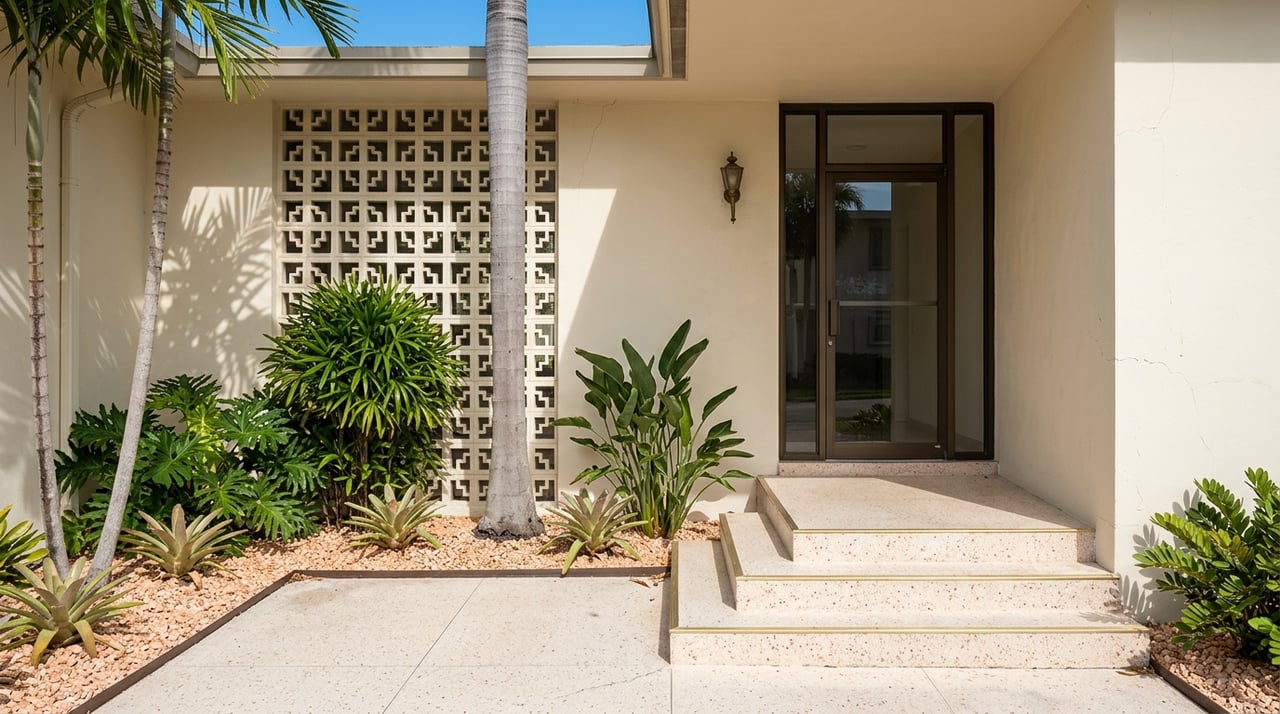
MiMo stands for Miami Modern. Its visual language includes asymmetry, open balconies, catwalks, rakish angles, and space-age forms. In practical terms, that means you are not just looking at another modern Miami neighborhood. You are looking at a part of the city where contemporary glass towers and preserved mid-century roadside design exist side by side.
Why the Design Contrast Matters
For buyers and lifestyle-driven investors, this contrast gives the area personality. Edgewater’s newer towers offer the sleek, view-oriented condo experience many people want in Miami, while MiMo brings a strong sense of place that feels rooted in local design history.
That mix can shape how the neighborhood feels from one outing to the next. One moment, you are on the bayfront near high-rise residences and park trails. A short drive later, you are passing a historic corridor where the architecture still carries the optimism and visual flair of postwar Miami.
Dining in Edgewater
Edgewater’s dining scene leans upscale, waterfront, and visually memorable. Several of the area’s best-known restaurants are tied closely to the bayfront setting, which reinforces the neighborhood’s polished, lifestyle-first identity.
Klaw, on North Bayshore Drive by Margaret Pace Park, is housed in the restored Miami Woman’s Club building and pairs floor-to-ceiling bay views with a menu centered on king crab and beef. Casadonna also occupies the same historic women’s club setting and focuses on coastal Italian waterfront dining. Amara at Paraiso rounds out the picture with a concept inspired by Biscayne Bay and South Florida’s food culture.
Taken together, these restaurants shape expectations. Edgewater is not only a place to live near the water. It is also a place where dining often feels like part of the neighborhood experience, with design, views, and atmosphere playing as much of a role as the menu.
Nearby Dining and Culture
One of Edgewater’s strengths is how easily it connects to nearby districts with their own identity. The Miami Design District, north of Wynwood, spans 18 blocks and is known for fashion, art, architecture, and fine dining. Midtown adds a more casual day-to-night energy, with places like Italica Midtown contributing to that mix.
Wynwood offers a different counterpoint, with an arts-driven atmosphere and easy access through the city trolley network. If you enjoy planning a full day around multiple stops, this part of Miami makes that simple. You can combine a waterfront morning, lunch in Midtown, and an art-focused afternoon or evening nearby without stretching too far.
Waterfront Routines and Outdoor Time
For many residents, Margaret Pace Park is one of the clearest reasons Edgewater feels livable. The park is open from 7:00 a.m. to 10:00 p.m. and supports a wide range of routines, from morning walks and workouts to tennis, volleyball, and relaxed time by the water.
That kind of public space matters in a condo-heavy neighborhood. Even if your building includes private amenities, the presence of a major bayfront park adds flexibility and a stronger neighborhood feel. It gives you a place to step outside your building and still stay connected to the waterfront setting.
Expanding Your Bayfront Loop
South of Edgewater, Bayfront Park and Maurice A. Ferré Park offer even more outdoor options along the bay. Both are operated by the Bayfront Park Management Trust and are open daily, with Bayfront Park also known for events and yoga classes.
For residents, this helps extend the lifestyle map. Edgewater does not function in isolation. Instead, it connects naturally to a broader bayfront routine that can include exercise, events, dining, and time outdoors across several nearby districts.
How Compact the Area Feels
The restored Vagabond Hotel in the MiMo Historic District offers a useful reference point for the area’s geography. Its location underscores how close MiMo sits to Midtown, the Design District, Wynwood, and Downtown by car.
That compactness is one of the neighborhood’s quiet advantages. You get distinct places with different energy levels, but they are close enough to combine easily. For buyers considering condo living, that can make day-to-day life feel more dynamic without requiring long commutes between lifestyle destinations.
What Condo Buyers Should Know
From a market perspective, Edgewater stands out as one of Miami’s more supply-rich condo areas. Realtor.com’s May 2026 summary reports a median listing price of $770,934, a median sold price of $645,000, 580 homes for sale, and a median of 98 days on market. The area is also classified there as a buyer’s market.
Those numbers suggest a practical takeaway for you as a buyer. In this market, there may be more room to compare buildings, layouts, views, and pricing than in a tighter inventory environment. That can be especially important in a neighborhood where building age, design, and amenity differences can shape long-term fit.
Newer Versus Older Condos
Regional data also helps explain what buyers are seeing on the ground. MIAMI Realtors’ December 2025 outlook projects Southeast Florida condo and townhome sales to decline by 5.3% in 2026, with prices softening just 0.5% after a 4.1% decline in 2025.
The more important detail is the split between newer and older buildings. The same report says newer condo buildings have been less affected than older ones, with year-to-date 2025 sales in newer condos up 5% year over year, while sales in buildings 25 years and older declined 10%. In a neighborhood like Edgewater, where modern towers are central to the identity, that distinction matters when you are weighing lifestyle, pricing, and building profile.
What Makes Edgewater Appealing
Edgewater appeals to buyers who want more than just a unit with a view. The neighborhood offers a residential bayfront setting, a major public park, design-forward dining, and close access to districts known for art, architecture, and restaurants.
It also offers variety within the condo search itself. Because inventory is relatively deep, you may be able to evaluate different towers and priorities with more care, whether your focus is waterfront exposure, newer construction, or proximity to the park and dining corridor.
A Smart Way to Evaluate the Area
If you are considering Edgewater, it helps to tour the neighborhood as a lifestyle loop rather than a single address. Walk Margaret Pace Park, spend time along North Bayshore Drive, and then drive Biscayne Boulevard through the MiMo Historic District to understand how the architecture shifts.
After that, fold in Midtown, Wynwood, and the Design District. Seeing how these nearby districts connect can tell you a lot about how you would actually live here. In a neighborhood defined by both place and proximity, that bigger-picture view is often where real clarity comes from.
If you want expert guidance on Miami-area condo living, waterfront lifestyle decisions, or evaluating luxury opportunities across South Florida, connect with Robert Posner and Monika Olimpiew. Their boutique, high-touch approach combines local market knowledge with the polished service today’s buyers and sellers expect.
FAQs
What is MiMo in Miami?
- MiMo stands for Miami Modern, a postwar design style known for asymmetry, open balconies, catwalks, and space-age forms that are visible along the Biscayne Boulevard historic corridor.
What is Edgewater known for in Miami?
- Edgewater is known as a bayfront residential district with waterfront condominiums, Margaret Pace Park, and easy access to nearby dining and cultural areas.
What makes Margaret Pace Park important to Edgewater residents?
- Margaret Pace Park adds waterfront access, walking trails, sports courts, outdoor fitness space, picnic areas, a playground, and a leash-only dog park to everyday life in a condo-focused neighborhood.
Is Edgewater a buyer’s market for condos?
- Based on Realtor.com’s May 2026 summary, Edgewater is classified as a buyer’s market, with 580 homes for sale and a median of 98 days on market.
How close is Edgewater to Wynwood, Midtown, and the Design District?
- These nearby areas are close enough to combine into a single outing, and the broader area also benefits from Miami’s trolley network serving core neighborhoods including Wynwood.
Are newer condos performing differently than older condos in South Florida?
- Yes. MIAMI Realtors reports that newer condo buildings have held up better, with 2025 year-to-date sales up 5% year over year, while sales in buildings 25 years and older declined 10%.